Key takeaways
- Collisions with pedestrians, tip-overs and falling loads are behind most serious forklift incidents.
- Separating people and forklifts comes before training in the hierarchy of controls.
- An LF licence isn't enough on its own: VOCs and familiarisation with the truck and site matter.
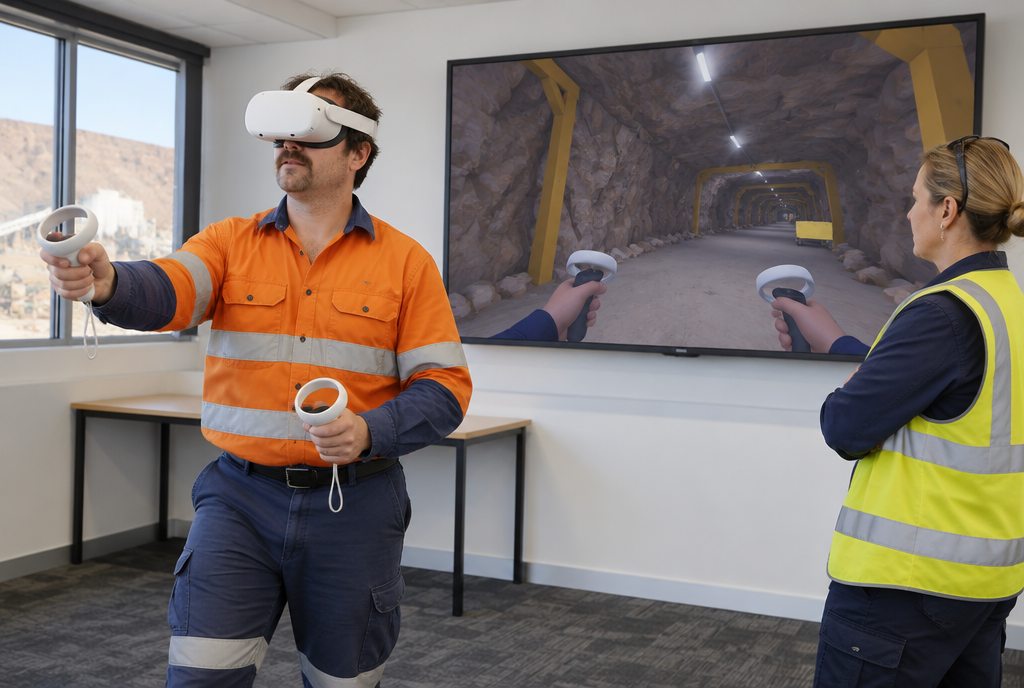
- VR and simulators let operators meet your blind corners and experience a tip-over without harm.
Why forklifts deserve special attention
Forklifts are everywhere: warehouses, factories, ports, farms, building sites and retail back-docks. Because they're so common, they're easy to underestimate. A loaded forklift is a heavy machine with poor visibility, rear-wheel steering and a high centre of gravity, often working centimetres from people on foot. Safe Work Australia and the state regulators consistently list forklifts among the most common machines involved in serious workplace incidents.
The hazards behind most forklift incidents
Collisions with pedestrians
The most serious forklift incidents often involve a person on foot. Typical causes: shared aisles, blind corners, reversing without a clear view, and people stepping out from behind racking or a parked truck.
Tip-overs
Forklifts tip sideways when turning too fast or turning with the load raised, and forwards or backwards on slopes and ramps or when overloaded. An operator thrown from a tipping forklift can be crushed by the overhead guard.
Falling loads
Loads fall when they're unstable, poorly stacked, outside the load centre, lifted too high while travelling, or knocked from racking.
Overloading and attachments
Every attachment changes the truck's capacity. Operators who don't check the data plate for the attachment fitted can overload the truck without realising it.
Loading docks and trailers
Trailers that creep away from the dock, dock plates that aren't secured, and edges without barriers are common causes of drop-offs.
Using forklifts to lift people
Standing on the tines or on a pallet is never acceptable. Lifting people needs a purpose-built work platform designed and secured for the truck.
Controls that work, in order
Training matters, but it isn't the first control. Under WHS laws, risks are managed by working down the hierarchy of controls.
- Separate people and forklifts: pedestrian-only zones, physical barriers, separate doors and walkways.
- Engineer the risk down: speed limiters, presence-sensing and warning systems, convex mirrors, good lighting.
- Plan the traffic: a site traffic management plan with one-way routes, crossing points and exclusion zones.
- Train and supervise: licensed operators, familiarised with the specific truck, attachments and site.
- Personal protective equipment: high-visibility clothing and safety footwear, as the last line of defence.
Licence, VOC and familiarisation
In Australia, operating a forklift truck needs an LF high risk work licence, and an order-picking forklift needs an LO licence. (See every class in our high risk work licence guide.) But a licence on its own isn't enough:
- A verification of competency (VOC) confirms an operator can safely use your trucks today.
- Familiarisation covers the specific truck, its attachments, your layout, your traffic rules and your emergency procedures.
- Refreshers stop habits drifting, especially for operators who drive only occasionally.
What to train, and how
| Skill | Best trained |
|---|---|
| Pre-start checks | On the real truck, with a checklist |
| Reading the data plate and load centre | Classroom, then VR with consequences |
| Pedestrian awareness at blind corners | VR or simulator on your layout |
| Turning and travelling with loads | Simulator, then real truck |
| Tip-over and what to do | VR or simulator only; never staged for real |
| Loading docks and trailers | VR on your dock, then supervised practice |
Where VR and simulators help most
- Your layout, before day one. New operators drive your aisles, docks and crossings in VR and meet the blind corners before they meet a person at one.
- Consequences without harm. A turn taken too fast with the load raised ends in a tip-over the operator will remember, without anyone getting hurt.
- Pedestrian scenarios on cue. The instructor sends a person out from behind racking at exactly the wrong moment, as many times as needed.
- Fair VOCs. Every operator gets the same scenario and scoring, which makes verification consistent across shifts and sites.
- Pedestrians train too. Workers on foot can experience the operator's view and blind spots in VR, which changes how they move around trucks.
What to measure
- Speed at intersections and in pedestrian zones.
- Load height while travelling.
- Near-misses with pedestrians and racking.
- Checks completed before lifting and before reversing.
- Time to complete a task without errors, not just time.
We build forklift simulator and VR training around your trucks, attachments and floor layout, on simulators with real controls or standalone VR, scored against the checks your assessors use.
This article is general information. Follow your regulator's guidance and your own risk assessments for your workplace.